Who are we and what is our aim

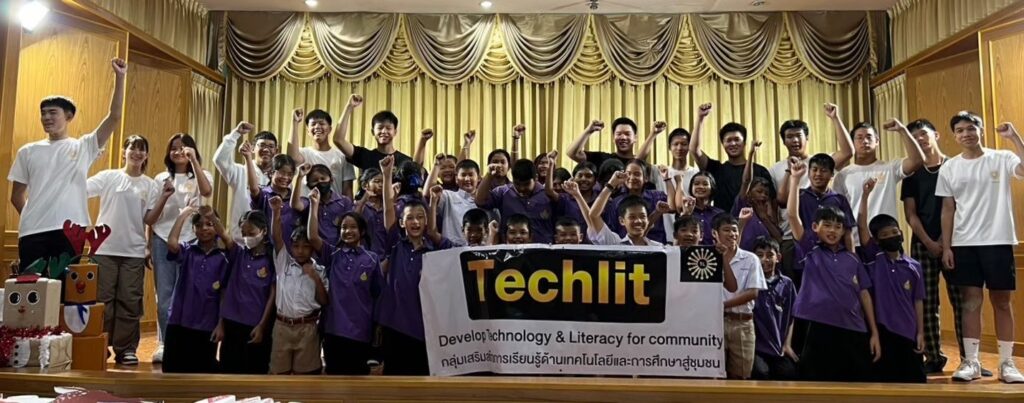
The TechLit Club, short for Technology and Literacy, was initiated in 2023 by middle school and high school students of International School Bangkok (ISB) at that time. The club aims to support children in rural or remote areas by providing opportunities to learn English and robotics. It also raises funds to purchase educational materials for children who lack financial resources.

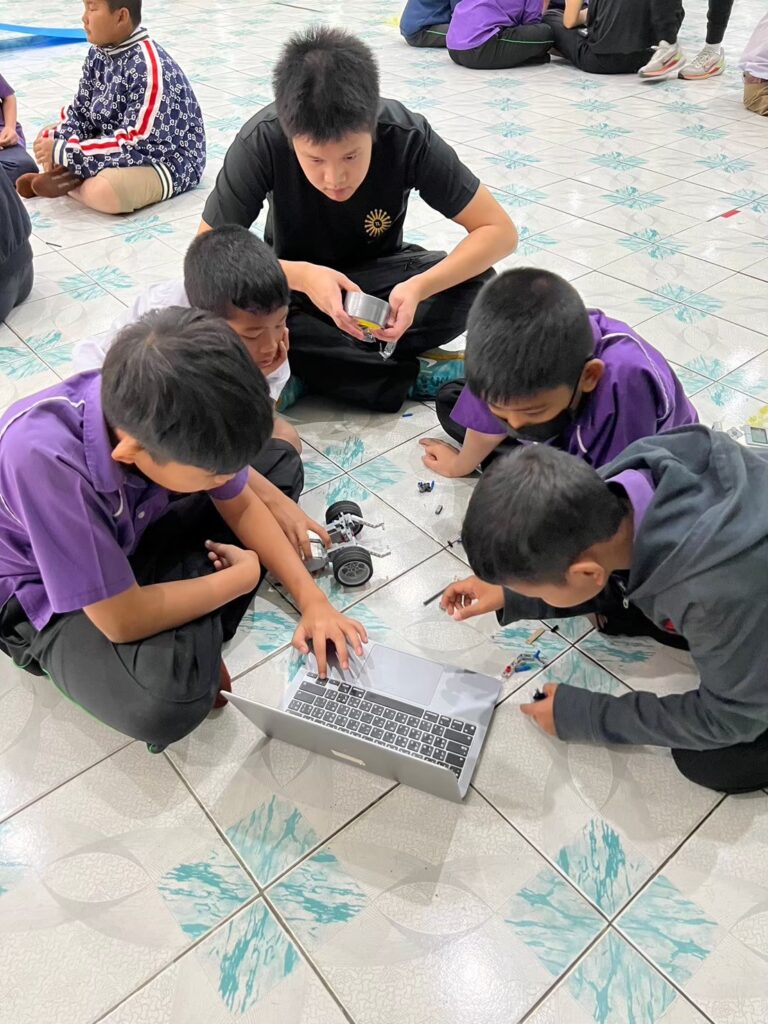
Students coding and robotics.
Coding and Robotics

At present, Thai schools from upper primary to secondary level already include robotics and coding in their basic curriculum. However, many government schools in rural areas still lack qualified instructors and adequate robotics equipment for teaching students.

Recognizing the growing importance of technology in learning and daily life—especially with AI becoming an increasingly important tool—TechLit aims to address this gap. The club works together to provide knowledge in coding and robotics so that students in these areas can gain their first hands-on experience with these technologies.

Our teaching begins with simple coding concepts and gradually applies them to control robots in order to accomplish specific goals or missions. Each mission is designed with different objectives and obstacles. Students practice writing code and assembling robots to complete the assigned tasks.

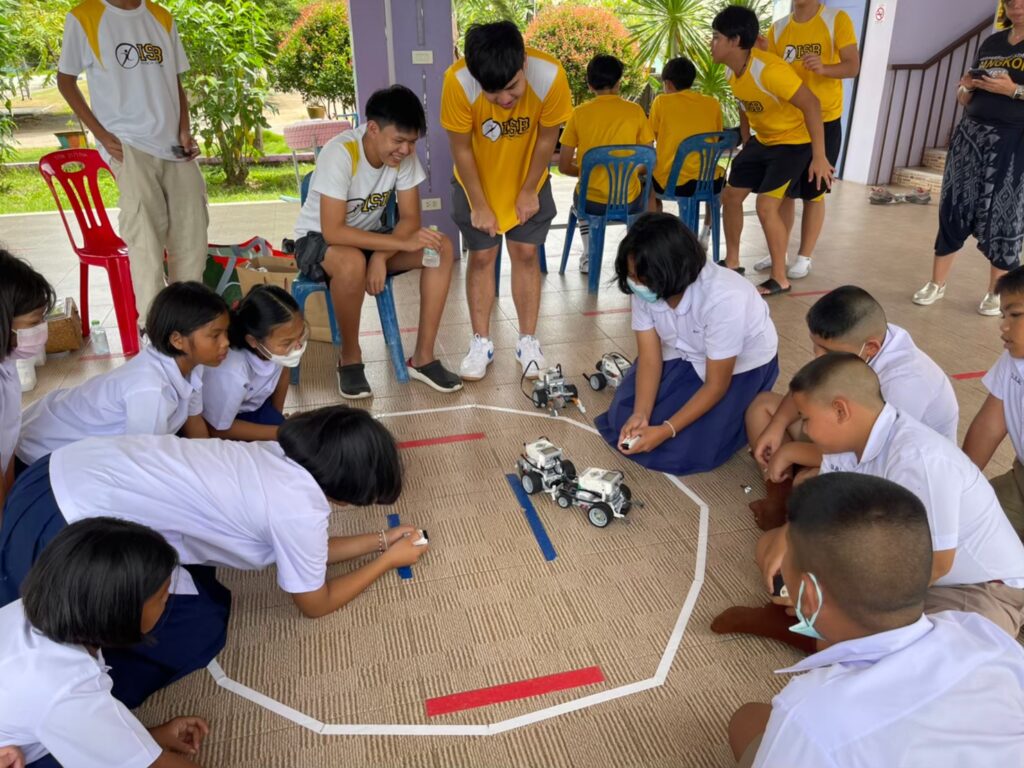
To make the learning experience more engaging, we also incorporate friendly competitions between groups, such as sumo robot games, obstacle avoidance challenges, and robot obstacle course races.

Students testing the robots.
Teaching English at Baan Suan Phung School.

English Teaching

When we visit under-resourced and remote schools to teach coding and robotics, we also always include English lessons. Many of these schools do not have enough English teachers to support the number of students, which limits the students’ learning opportunities.

Recognizing the importance of English in today’s world, we volunteer to help develop students’ language skills by teaching speaking and listening, as well as basic vocabulary and simple everyday sentences.

Our teaching approach focuses on learning through games so that students can enjoy the lessons while gaining knowledge at the same time. The activities include games such as charades for guessing vocabulary—often based on categories like fruits, animals, or actions—as well as bingo games, matching games, and other interactive activities.